💡 Science Deep-Dive
Red light therapy has gone from a quiet NASA experiment to one of the more interesting wellness tools people are actually using day-to-day. Originally developed to help astronauts heal faster in space, it’s now widely available at home in the form of panels, masks, and handheld devices. The idea is straightforward: low-level red and near-infrared light penetrates the skin to stimulate cells, increase energy production, reduce inflammation, and support natural repair processes — no heat, no UV, no downtime.
Here’s a clear, no-hype breakdown: how it works at the cellular level, the benefits with the strongest evidence including key recent studies, a practical look at setups that actually get used, and the real limitations.
Years of light therapy research
People in 2025 umbrella review
Crow’s feet reduction in 12 weeks
Randomized controlled trials pooled
🕰️ A Wild History: From Nobel Prize to NASA
Red light therapy didn’t pop up overnight — it’s built on over a century of light-based healing research.
Danish physician Niels Ryberg Finsen pioneers modern phototherapy, using concentrated light to treat lupus vulgaris and smallpox scars. He wins the Nobel Prize in Physiology or Medicine in 1903 — the first to establish light as a legitimate medical tool.
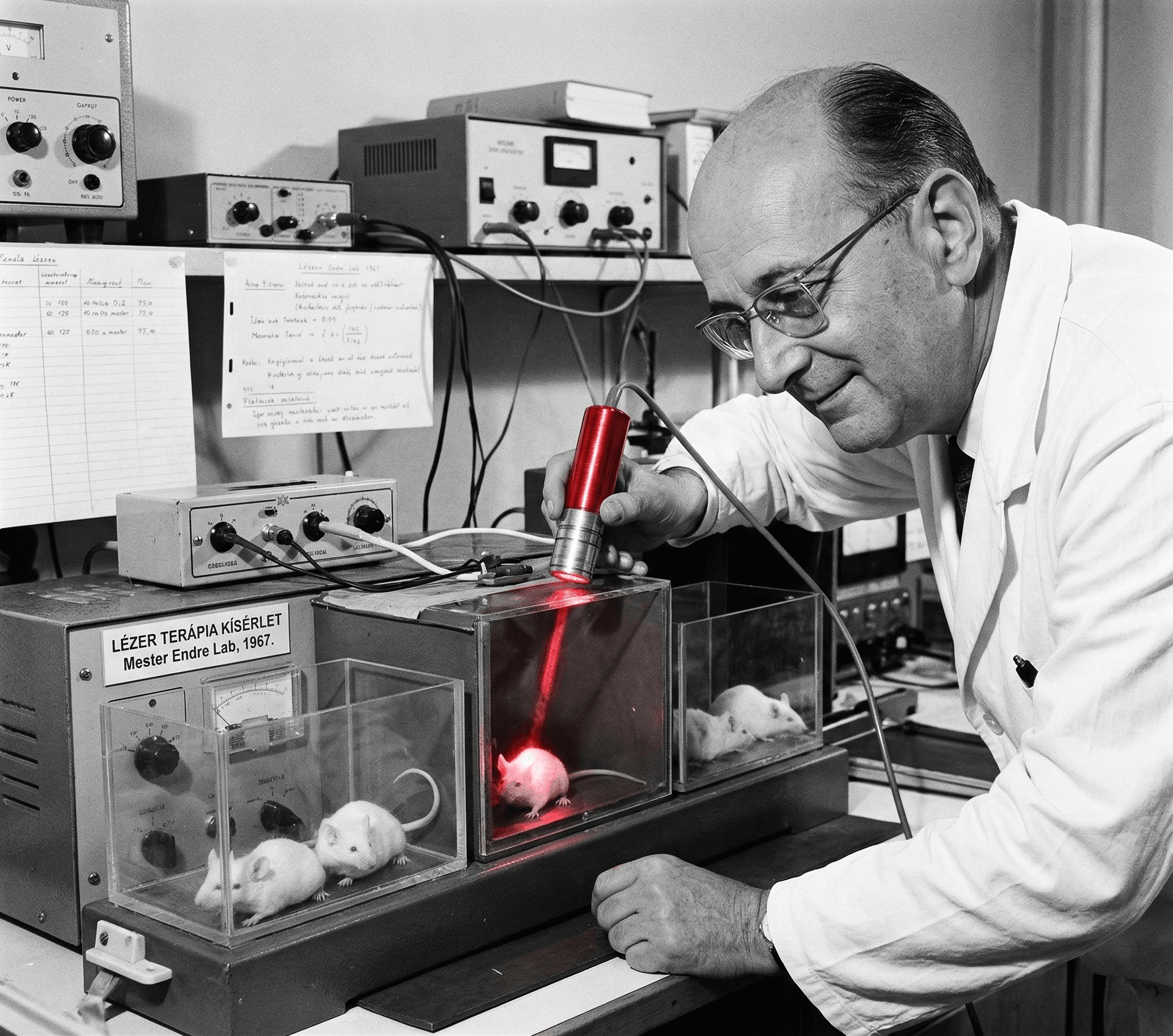
Hungarian physician Endre Mester at Semmelweis Medical University tests a low-power ruby laser on mice expecting to cause skin cancer. Instead: no cancer, faster hair regrowth on shaved areas, and quicker wound healing. This accidental find kicks off “laser biostimulation” — later called photobiomodulation. Mester becomes the father of low-level laser therapy.
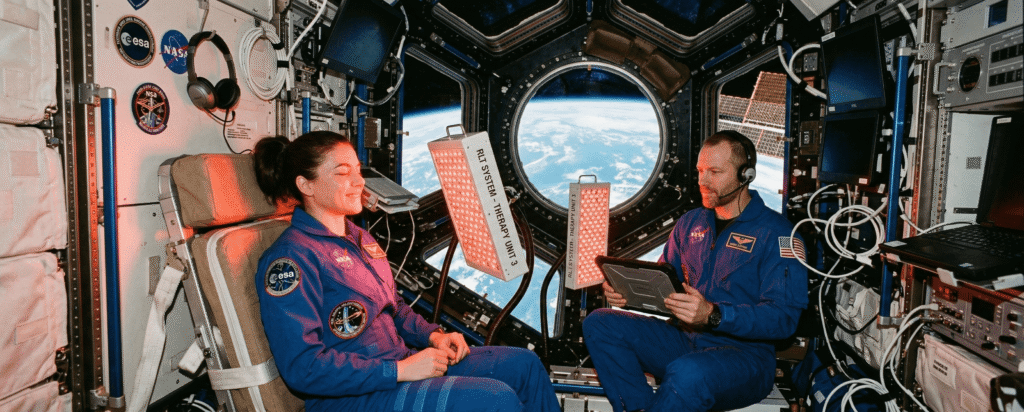
NASA experiments with red LEDs for growing plants in space. They notice the light speeds up wound healing and helps with muscle and bone issues for astronauts. This pushes red light therapy into mainstream medical research and, eventually, at-home devices.
The evidence base explodes. Multiple large meta-analyses and umbrella reviews covering thousands of people confirm benefits for skin, hair, pain, and recovery — with moderate-to-strong certainty ratings from researchers.
🔬 How It Works at the Cellular Level
Low-level wavelengths of red light (usually 630–700 nm) or near-infrared light (deeper penetrating, 800–900 nm) shine on your skin or body. No UV rays — so no burning or cancer risk. The light gets absorbed by your mitochondria, the power plants inside your cells.
⚡ The Mechanism in Simple Terms
Mitochondria absorb red/NIR photons → boosts ATP production (cellular energy currency) → reduces oxidative stress and inflammation → kicks off repair, collagen synthesis, and regeneration. Think of it as giving your cells a gentle energy boost and signaling them to get to work healing.
The two key wavelength ranges work differently: red light (630–700 nm) penetrates the skin surface — best for skin rejuvenation, wound healing, and collagen production. Near-infrared (800–900 nm) goes deeper into muscle, joint, and bone tissue — better for pain, inflammation, and athletic recovery.
📊 Evidence Strength by Benefit
Based on the 2025 umbrella review (15 meta-analyses, 204 RCTs, 9,000+ people) and other recent systematic reviews:
Strong ✅
Moderate ✅
Moderate ✅
Moderate ✅
Moderate ✅
Moderate ✅
Emerging 🔬
Emerging 🔬
Weak ⚠️
🧪 The Key Studies Worth Knowing
“Reverse skin aging signs by red light photobiomodulation” — Skin Research and Technology
20 healthy women (ages 45–70) used a 630 nm red LED mask twice a week for 12 minutes per session over 3 months. Measured with high-res imaging, cutometry, and ultrasound.
Crow’s feet reduction at 12 weeks
Skin firmness increase
Benefits lasted post-treatment
“Effects of photobiomodulation on multiple health outcomes” — Systematic Reviews
Pooled 15 meta-analyses from 204 randomized controlled trials with over 9,000 participants. The most comprehensive synthesis of red light therapy evidence to date.
Effect size: knee OA disability
Effect size: fibromyalgia fatigue
Effect size: hair density
“A Controlled Trial to Determine the Efficacy of Red and Near-Infrared Light Treatment” — Photomedicine and Laser Surgery
136 participants. Treated groups showed better skin satisfaction, reduced fine lines, wrinkles and roughness, and measurable collagen density increases via ultrasound. Safe — no major side effects reported.
✅ Benefits with Real Backing
Strongest evidence. Boosts collagen, reduces fine lines, improves elasticity, fades dark spots, smooths texture. Structural changes confirmed via imaging.
Reduces post-exercise soreness, oxidative stress, muscle damage. Meta-analyses support faster recovery and less fatigue for athletes.
Good data for androgenetic alopecia. Stimulates follicles, increases hair density and thickness. Solid add-on, not a cure.
Moderate evidence for knee osteoarthritis disability reduction, fibromyalgia, tendinopathy, and myofascial pain.
Accelerates skin and tissue healing, reduces scarring, supports recovery from chronic wounds and post-surgical sites.
Repeated low-level RLT slows childhood myopia progression. Consistent benefits in 2024–2026 meta-analyses.
Moderate evidence for cognition improvements, especially post-stroke and mild dementia. Memory and daily function gains in preliminary trials.
Emerging evidence. Reduces depression symptoms in some contexts. Sleep gains shown for shift workers in 2025 meta-analysis.
🚫 Myths Busted
Setting the Record Straight
❌ “It’s brand new and unproven” — Roots go back over 120 years. Mester’s key discovery was in 1967. Thousands of studies exist.
❌ “It causes cancer” — No UV, no evidence of cancer risk. Confirmed by Cleveland Clinic, Stanford, and multiple systematic reviews.
❌ “It’s the same as infrared saunas” — Completely different mechanisms. Saunas use heat. RLT uses specific light wavelengths to stimulate mitochondria.
❌ “It fixes everything” — Massive testosterone boosts, huge sleep fixes, curing serious disease? Those claims need way more research. It’s powerful for skin, hair, specific pains, and recovery — not a miracle cure.
⚠️ Any Downsides or Risks?
Honestly, it’s one of the safer wellness tools out there. Side effects are rare and mild — temporary redness, warmth, or dryness if overdone. No UV means no cancer link. A few things to watch:
- Don’t stare directly at the lights — use eye protection if recommended by the device
- Avoid if you have photosensitivity conditions (e.g. lupus) or are on photosensitizing medications
- Long-term heavy home use isn’t fully studied — stick to recommended session lengths
- Talk to a doc if you have any underlying conditions
🔧 My Setup & Tips for Getting Started
A combo that a lot of people gravitate toward in 2025–2026: a full-size panel for broad coverage plus a smaller portable device for targeted use.
🖥️ Full-Size Panel
Best for whole-body sessions, muscle recovery, joints, inflammation, and general wellness boosts.
- High irradiance (power output matters)
- Multiple wavelengths (red + NIR)
- Good coverage area
- 10–20 min standing/sitting sessions
- Post-gym or larger area treatment
📱 Portable / Compact Device
Best for face, spot treatment, travel, or quick daily sessions when you can’t set up the big panel.
- Face masks or handheld wands
- Easy to move around the house
- Travel-friendly
- Quick 5–10 min targeted sessions
- Knees, elbows, face, neck
💡 Tips from Trial and Error
- Consistency is everything: 10–20 min, 3–5x/week. Results compound over weeks, not days.
- Start slow: See how your skin and body react before going to full duration every day.
- Clean your devices: Especially anything face-touching — prevents breakouts.
- Pair with basics: RLT is an enhancer, not a replacement for sleep, nutrition, and movement.
- Distance matters: Follow device guidelines — too far reduces irradiance, too close can overdose.
- Track your results: Take photos in consistent lighting before and after 4 weeks. The changes are real but subtle at first.
🎯 Bottom Line
Red light therapy won’t rewind 20 years or fix every issue. But knowing it traces back to Finsen’s 1903 Nobel work, Mester’s 1967 accidental discovery of faster hair and wound healing, and NASA’s plant-to-people experiments makes the science feel grounded — this isn’t a wellness fad.
For skin rejuvenation, certain joint pains, hair density, and athletic recovery — it’s low-risk with a real evidence base that’s still growing fast. Science is building quickly, and this is one of those tools where getting in early with consistent use pays off.
Have You Tried Red Light Therapy?
What setup are you using — full panel, mask, portable? Seen results for skin, pain, or recovery? Drop your experience in the comments — love hearing real-world feedback on this stuff. 👇